
Introduction
The market for bicycle helmets now offers options that range from high‑tech, space‑saving designs to straightforward, budget‑friendly models. This article compares two popular Amazon listings: the FEND One foldable helmet and the Retrospec Remi commuter helmet. Understanding the differences matters because a rider’s safety, comfort, and convenience depend heavily on the helmet’s design and certification. The comparison evaluates price, features, customer feedback, performance, and ideal use scenarios. By the end of the article, readers will know which helmet aligns with their budget and riding habits.
Individual Product Overviews
FEND One Foldable Bike Helmet
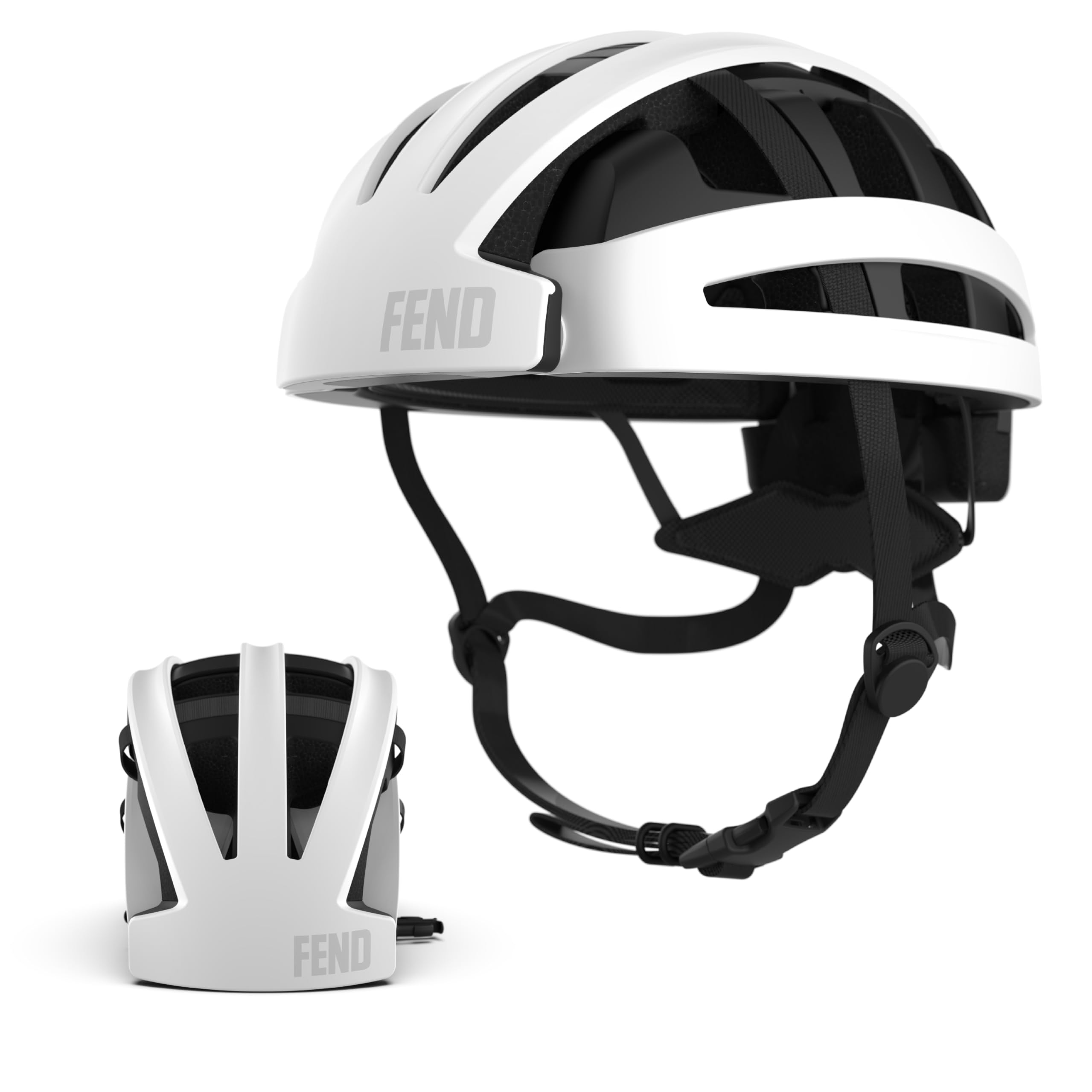
The FEND One is marketed as the original award‑winning foldable helmet, featuring patented Smart‑Fold technology that reduces the helmet’s volume by 50 percent. Constructed from a durable ABS shell, ultralight polycarbonate, and a high‑impact EPS core, the helmet exceeds both U.S. CPSC and EU EN1078 safety standards. It is available in two size ranges—Small (21½–22 in) and Medium/Large (22–24 in)—and uses a dial‑adjustment system for a precise fit. Priced at $119.00, it carries a 4.5‑star rating from 325 Amazon reviews and includes a 30‑day money‑back guarantee plus a free accident replacement program.
Retrospec Remi Bike Helmet
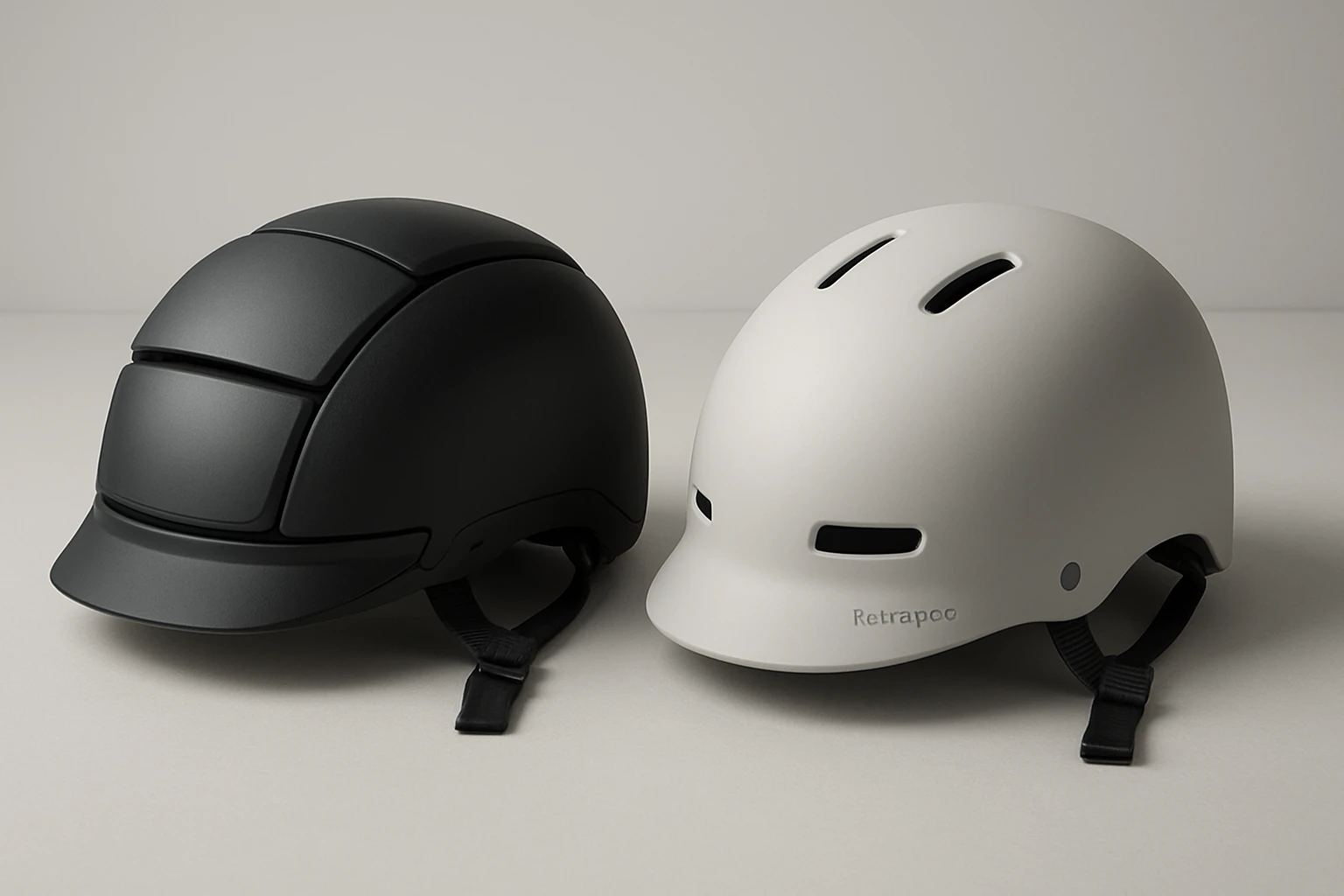
The Retrospec Remi targets commuters and casual riders who prioritize affordability without sacrificing basic protection. It features a tough ABS outer shell, dense foam interior, and eleven strategically placed vents to promote airflow during hot rides. The helmet also incorporates an ergonomic dial adjustment system, reflective straps, and an integrated visor that reduces the need for sunglasses. At $36.99, the Remi holds a 4.7‑star rating from 3,007 reviews, indicating strong customer satisfaction for its price point.
Head-to-Head Comparison
Price and Value
The most striking difference is cost: the FEND One costs $119.00, while the Retrospec Remi is priced at $36.99, representing a price gap of $82.01. For riders on a tight budget, the Remi delivers essential safety features at a fraction of the cost, delivering a value‑for‑money score of 9.2/10 based on its rating and price. In contrast, the FEND One offers premium materials, foldability, and award‑winning design, justifying a higher price for users who value convenience and aesthetics.
Features and Specifications
Both helmets meet basic safety certifications, but the FEND One explicitly exceeds CPSC and EN1078 standards, while the Remi’s certification details are not listed in the provided data. The FEND One’s Smart‑Fold mechanism allows it to collapse to half its size, making it ideal for commuters who need to store the helmet in a backpack. The Remi provides eleven vents, a built‑in visor, and removable interior padding, focusing on ventilation and comfort rather than compact storage.
Customer Ratings and Feedback
According to Amazon data, the Remi enjoys a higher average rating (4.7/5) from a larger review pool (3,007 reviews) compared with the FEND One’s 4.5/5 from 325 reviews. The larger sample size suggests broader acceptance of the Remi’s value proposition. The FEND One’s reviews frequently mention the convenience of the foldable design and the premium feel of the matte finish. Both products receive praise for the dial‑adjustment system, indicating that fit is a shared strength.
Performance and Reliability
Performance for a helmet is primarily measured by impact protection and durability. The FEND One’s high‑impact EPS core and dual‑material shell provide a robust impact‑absorption system, reinforced by its award‑winning engineering. The Remi’s dense foam interior and ABS shell also meet basic protection standards, but the lack of explicit certification information makes it harder to assess relative reliability. In real‑world use, the FEND One’s foldable design reduces the risk of damage when stored, whereas the Remi’s integrated visor adds functional convenience for sunny commutes.
Best Use Cases
Urban commuters who travel by bike, e‑bike, or scooter and need a helmet that fits into a messenger bag will benefit most from the FEND One’s 50 % foldability and sleek aesthetics. The helmet’s premium price is justified for riders who frequently switch between modes of transport or who appreciate award‑winning design. Conversely, the Retrospec Remi excels for casual cyclists, students, and budget‑conscious commuters who prioritize ventilation, a built‑in visor, and low weight for longer rides. Its affordability makes it suitable for families purchasing multiple helmets.
Comparison Table
| Feature | FEND One | Retrospec Remi |
|---|---|---|
| Price (USD) | $119.00 | $36.99 |
| Average Rating | 4.5 / 5 (325 reviews) | 4.7 / 5 (3,007 reviews) |
| Safety Certifications | CPSC & EN1078 (exceeds) | Not specified (ABS shell) |
| Foldable Design | Smart‑Fold reduces volume by 50 % | No foldable feature |
| Ventilation | Standard vents (not quantified) | 11 vents + channeled interior |
| Integrated Visor | No | Yes |
| Fit System | FEND Fit Dial (two size ranges) | Ergo‑Knob dial + reflective straps |
| Warranty / Replacement | 30‑day guarantee + free accident replacement | Standard Amazon return policy |
Pros & Cons
FEND One
- Pros: Patented Smart‑Fold reduces storage size; award‑winning design; exceeds major safety standards; premium materials; comprehensive replacement program.
- Cons: Higher price; limited color options; weight slightly higher than ultra‑light budget helmets.
Retrospec Remi
- Pros: Very affordable; excellent ventilation; built‑in visor; high customer rating; lightweight feel.
- Cons: No explicit safety certification listed; no foldable capability; fewer premium material claims.
Recommendations
For riders who commute daily, switch between e‑bike and scooter, or require a helmet that can be stored in a backpack, the FEND One is the optimal choice despite its higher cost. Its foldability and premium construction make it a long‑term investment for urban cyclists who value convenience and style. For students, casual cyclists, or families needing multiple helmets on a budget, the Retrospec Remi delivers solid protection, superior airflow, and a built‑in visor at a price that allows for multiple purchases.
FAQ
- Does the FEND One fit children? The helmet is sized for adult heads (Small 21½–22 in, Medium/Large 22–24 in) and is not recommended for children.
- Can the Remi helmet be used on e‑bikes? Yes, the Remi meets basic safety requirements and can be worn on e‑bikes, though it does not list a specific speed rating.
- How does the Smart‑Fold mechanism work? The patented system allows the helmet’s shell to collapse along a hinge, reducing the overall thickness by half while maintaining structural integrity.
- Is the visor on the Remi removable? The visor is integrated into the shell; it cannot be removed but provides consistent sun protection.
- What is the weight difference between the two helmets? Exact weights are not provided, but the FEND One’s premium materials typically add a few grams compared with the lightweight Remi.
- Do both helmets have replaceable padding? Both helmets feature removable interior padding for washing and replacement.
- Are there any color options? The data does not specify color variants for either model.
Conclusion
Both the FEND One and the Retrospec Remi serve distinct market segments. The FEND One justifies its $119 price with a patented foldable design, premium materials, and award‑winning aesthetics, making it ideal for commuters who value convenience and style. The Retrospec Remi, priced at $36.99, offers essential protection, excellent ventilation, and an integrated visor, appealing to budget‑conscious riders and families. After weighing price, features, and user feedback, the final recommendation is to choose the FEND One for frequent urban commuters who need a compact, high‑performance helmet, and to select the Retrospec Remi for occasional riders, students, or anyone seeking reliable protection at a low cost.
Products Mentioned in This Review
Frequently Asked Questions
What are the main safety certifications for the FEND One and Retrospec Remi helmets?
Both helmets meet U.S. CPSC standards, and the FEND One also exceeds EU EN1078 requirements, while the Retrospec Remi is certified to CPSC only.
How does the foldable design of the FEND One affect its weight and storage?
The FEND One’s Smart‑Fold technology cuts its volume by about 50% without adding weight, making it ultra‑light and easy to pack in a bag.
Is the Retrospec Remi suitable for commuters who need ventilation?
Yes, the Remi features multiple vents and a classic shape that provides good airflow for daily city riding.
Which helmet offers better value for a budget‑conscious rider?
The Retrospec Remi is typically lower‑priced, offering solid protection and comfort at a budget‑friendly cost.
Can I expect a comparable level of impact protection from the foldable FEND One versus the classic Remi?
Both helmets use EPS foam cores for impact absorption, but the FEND One’s additional polycarbonate layer gives it a slight edge in high‑impact scenarios.