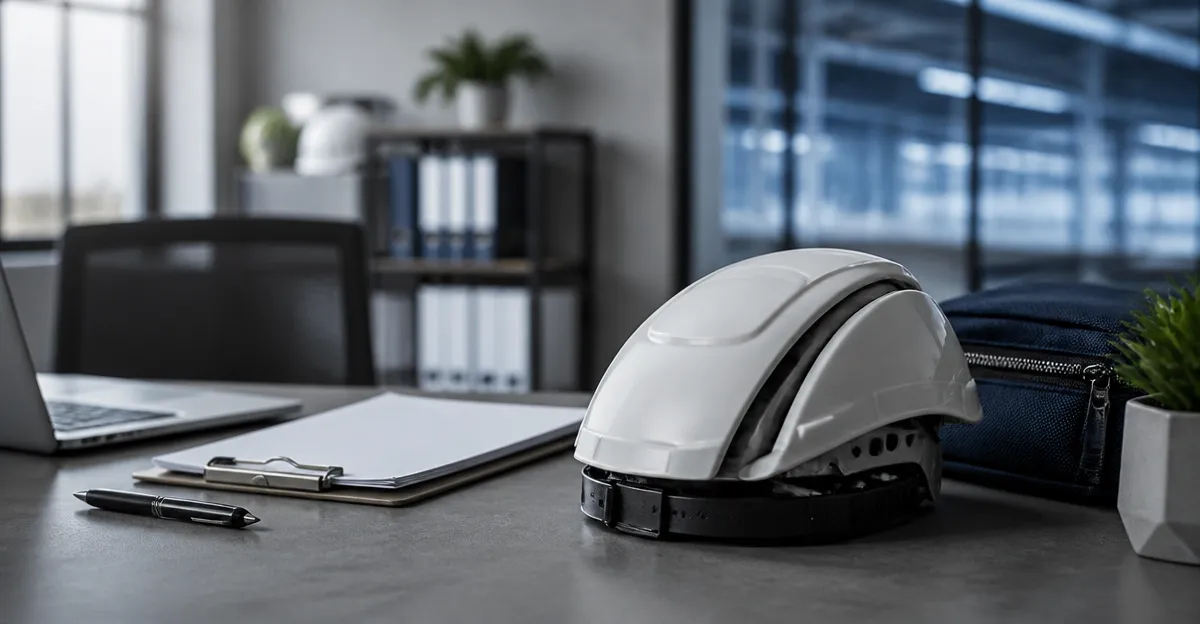
Foldable Helmet Workplace Policy Guide for Employers: Compliance, Safety Standards & Implementation Checklist
Introduction
This guide provides employers with a step-by-step framework for establishing a robust foldable helmet policy. Readers will learn about regulatory requirements, best practices for policy drafting, and how to select appropriate head protection equipment. The document also includes a practical implementation checklist to ensure consistent enforcement across all work sites. By following these recommendations, organizations can reduce injury risk while maintaining regulatory compliance.
Background and Context
Head injuries remain a leading cause of occupational fatalities in construction, manufacturing, and utility sectors. Foldable helmets, also known as hard hats with collapsible suspension systems, offer enhanced comfort without compromising protection. Standards such as ANSI Z89.1-2014 (United States) and CSA Z94.1-05 (Canada) define performance criteria for impact resistance, penetration, and electrical insulation. Understanding these standards is essential for employers who wish to adopt safe and legally defensible helmet policies.
Regulatory Framework
Employers must first identify the jurisdictional standards that apply to their operations. In the United States, ANSI Z89.1-2014 classifies helmets into Type I (top impact) and Type II (lateral impact) categories, with subclasses for electrical protection. Canada follows CSA Z94.1-05, which mirrors many ANSI requirements but adds specific testing for heat resistance. Many international projects also reference EN 397 (Europe) and ISO 3873 (global). Compliance with these standards is not optional; failure to meet them can result in fines, work stoppages, and increased liability.
Beyond statutory standards, industry bodies such as OSHA and the National Safety Council publish guidance on personal protective equipment (PPE) program management. OSHA 29 CFR 1910.135 mandates that employers provide head protection that meets applicable standards and that they conduct regular inspections. The guidance also emphasizes documentation of PPE selection, training, and maintenance. Employers should integrate these requirements into their internal safety management system.
Policy Development
Creating a clear, written helmet policy is the cornerstone of an effective PPE program. The policy should define the scope of work where helmets are required, specify the approved helmet types, and outline responsibilities for workers, supervisors, and safety personnel. It is advisable to include a section on “Foldable Helmet Specifics” that addresses the use of ratchet suspension systems, vented designs, and chin straps.
Key elements to include are:
- Eligibility criteria for each employee based on job function.
- Procedures for helmet issuance, fit testing, and replacement cycles.
- Maintenance requirements, including cleaning, inspection frequency, and damage reporting.
- Disciplinary actions for non‑compliance.
Employers should circulate the policy electronically and require signed acknowledgment to demonstrate understanding and acceptance.
Training and Enforcement
Even the best‑written policy fails without proper training. All workers must receive instruction on the correct donning and doffing of foldable helmets, adjustment of ratchet suspensions, and the importance of ventilation features. Training should be conducted during onboarding and refreshed annually or whenever new helmet models are introduced.
Supervisors play a critical role in enforcement. They must perform daily visual checks to verify that helmets are worn correctly and that the suspension systems are locked in place. Any helmet that shows signs of deformation, cracked vents, or worn padding should be removed from service immediately.
Product Integration
Integrating high‑quality helmets into the policy reinforces safety outcomes. The following products exemplify best‑in‑class features that align with regulatory standards and enhance wearer comfort.
The first recommendation is the Leumoi Hard Hat. This bulk pack supplies twenty ABS‑constructed helmets with adjustable ratchet suspension, ventilation vents, and a cotton brow pad. The helmets meet ANSI Z89.1 requirements, provide impact resistance, and feature a chin strap to prevent loss during a fall. With a 4.5‑star rating from 45 reviews, users praise the durability and comfort of the vented design.
For projects requiring a lightweight, low‑profile option, the Pyramex Ridgeline Hard Hat offers a vented ABS shell, 4‑point ratchet suspension, and a padded rear neck strap. It complies with ANSI Z89.1‑2009 Type I, Class C standards and includes a replaceable sweat band for extended wear. Reviewers (4.6 stars from 437) highlight its balance between protection and comfort, making it suitable for electricians and mechanics.
When maximum durability and heat resistance are paramount, the LIFT SAFETY Dax Carbon Fiber Hard Hat stands out. Its carbon‑fiber reinforced shell delivers superior rigidity while remaining lightweight. The helmet features a full brim, perforated synthetic leather dome, EVA foam insert, and a 6‑point suspension system. Certified to ANSI Z89.1‑2014 Type I, Class C, it resists radiant heat up to 350°F. With 4.5 stars from 6,761 reviews, it is praised for comfort in hot environments.
Comparison and Selection Guide
| Feature | Leumoi Hard Hat | Pyramex Ridgeline | LIFT SAFETY Dax |
|---|---|---|---|
| Material | ABS | ABS | Carbon‑fiber reinforced resin |
| Ventilation | Integrated vents | Vented top | Perforated synthetic leather |
| Adjustment | Ratchet suspension (52‑63 cm) | 4‑point ratchet (6.5‑8 in) | Oversized ratcheting dial |
| Price (USD) | $156.99 (20‑pack) | $15.75 | $180.00 |
| Rating | 4.5/5 (45 reviews) | 4.6/5 (437 reviews) | 4.5/5 (6,761 reviews) |
| Heat Resistance | Standard | Standard | Up to 350°F |
Employers should match helmet attributes to job‑site conditions. For large crews requiring cost‑effective bulk solutions, Leumoi provides volume and adjustable fit. For trades that value a low‑profile design and quick adjustments, Pyramex offers an economical choice. For high‑temperature environments or projects demanding maximum impact protection, the Dax carbon‑fiber model is the optimal selection.
Best Practices & Tips
- Conduct a pre‑deployment risk assessment to determine the appropriate helmet class for each task.
- Implement a barcode or RFID tracking system to monitor helmet issuance, inspection dates, and replacement cycles.
- Schedule quarterly fit‑testing sessions to accommodate changes in head size due to weight fluctuations or protective accessories.
- Maintain a spare inventory of helmets to replace damaged units without workflow interruption.
- Encourage worker feedback on comfort and ventilation; adjust procurement criteria based on real‑world usage data.
Frequently Asked Questions
- Do foldable helmets meet the same safety standards as rigid hard hats? Yes; when they conform to ANSI Z89.1 or CSA Z94.1, the foldable suspension system does not diminish impact protection.
- How often should helmets be inspected? Visual inspections should occur daily, with a thorough condition check at least once per month.
- Can a worker share a helmet across shifts? Sharing is permissible only if the helmet is cleaned, inspected, and properly fitted for each individual.
- What is the recommended replacement interval? Manufacturers typically advise replacement every 3‑5 years, or sooner if the helmet shows cracks, deformation, or compromised suspension.
- Are vented helmets suitable for electrical work? Vented helmets can be used for Class C electrical protection if they are rated for that purpose; always verify the certification label.
- Do I need separate helmets for different temperature zones? Not necessarily; however, helmets with heat‑resistant shells, such as the Dax carbon‑fiber model, are advantageous in high‑heat environments.
- How can I ensure compliance on subcontractor sites? Include helmet policy clauses in subcontractor agreements and conduct joint safety audits.
Conclusion
Implementing a comprehensive foldable helmet policy safeguards workers, fulfills legal obligations, and fosters a culture of safety. By aligning policy elements with regulatory standards, providing thorough training, and selecting appropriate head protection, employers can mitigate head‑injury risks effectively. The implementation checklist and product recommendations presented herein serve as actionable tools for immediate deployment.
Products Featured in This Guide
Leumoi Hard Hat
Price: $156.99 | Rating: 4.5/5 (45 reviews)
Featured for its bulk availability, adjustable ratchet suspension, and vented ABS construction that meets ANSI standards.
Pyramex Ridgeline Hard Hat
Price: $15.75 | Rating: 4.6/5 (437 reviews)
Featured for its lightweight low‑profile design, vented ABS shell, and cost‑effective solution for diverse trade workers.
LIFT SAFETY Dax Carbon Fiber Hard Hat
Price: $180.00 | Rating: 4.5/5 (6,761 reviews)
Featured for its carbon‑fiber reinforced shell, heat resistance up to 350°F, and premium comfort features for high‑risk environments.