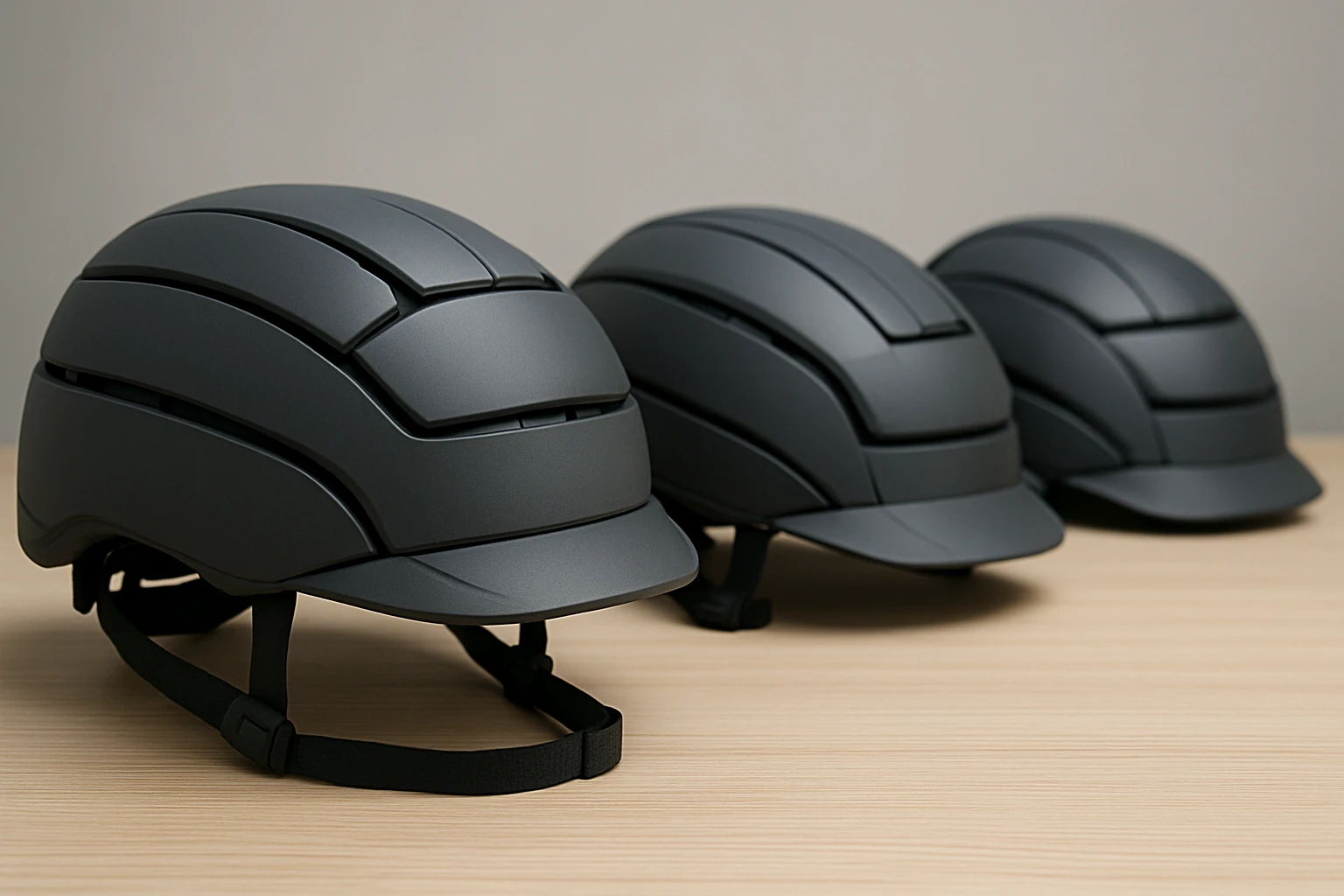

Foldable Helmets: The Ultimate Retail Display Guide — Creative In-Store, Window & Online Merchandising Ideas to Boost Sales
Introduction
The modern cyclist, commuter and skateboarder increasingly demands protective gear that combines safety with convenience. Foldable helmets satisfy this demand by offering compact storage without compromising impact protection. This guide explains how retailers can present foldable helmets in a manner that highlights their unique benefits, drives foot traffic, and ultimately increases conversion rates. Readers will learn foundational concepts, effective visual merchandising tactics, product selection criteria, and actionable best‑practice tips.
Background and Context
Traditional helmets occupy significant space in backpacks, lockers and retail shelves, creating a barrier to spontaneous purchase. The advent of patented folding mechanisms, such as those employed by the Closca Foldable Bike Helmet, resolves this friction point by reducing the folded height to approximately 6.5 cm. Safety standards for bicycles, electric scooters, skateboards and inline skates remain unchanged, ensuring that the foldable design does not compromise protection. Understanding these technical foundations enables retailers to communicate value accurately and credibly.
Key Concepts and Strategies for Effective Merchandising
Successful display of foldable helmets relies on three core concepts: visual clarity, experiential engagement, and contextual storytelling. Each concept can be addressed through specific in‑store, window and digital tactics.
1. Visual Clarity
- Use high‑contrast signage that emphasizes the folding action, such as "Folds in One Second – 6.5 cm When Closed".
- Position helmets at eye level on dedicated shelf inserts that allow customers to see both the unfolded and folded states.
- Incorporate QR codes that link to a short video demonstration of the folding mechanism.
2. Experiential Engagement
Allow shoppers to handle the product in a controlled environment. A "Try‑It‑Out" station equipped with a mannequin head provides tactile feedback while maintaining hygiene. Demonstrations by knowledgeable staff reinforce the safety claims and highlight the lightweight construction (250‑280 g) of the helmet.
3. Contextual Storytelling
Display accessories such as travel bags, commuter backpacks and bike racks alongside the helmet to illustrate real‑world usage scenarios. Use lifestyle imagery that shows the helmet being carried in a suitcase, stored under a desk or worn on an electric scooter. This narrative approach encourages customers to envision the product in their own routines.
Product Recommendation
The most compelling example of a foldable helmet is the Closca Foldable Bike Helmet. Priced at $79.90, it holds a 4.5‑star rating based on 472 reviews, indicating strong consumer confidence. Key specifications include a polycarbonate shell, EPS foam core, patented folding system that collapses to 6.5 cm, and a rear elastic‑band adjustment that accommodates head circumferences from 56 cm to 63 cm. The helmet’s weight ranges from 250 g to 280 g, making it one of the lightest options on the market. Its 3‑year manufacturer warranty further reinforces durability.
Comparison and Selection Guide
When advising customers, retailers should evaluate foldable helmets against three criteria: safety certification, folding efficiency and comfort features. The table below compares the Closca model with generic alternatives that lack one or more of these attributes.
| Feature | Closca Foldable Bike Helmet | Standard Non‑Foldable Helmet | Generic Foldable Model |
|---|---|---|---|
| Safety Standards | Compliant with EU and US bicycle, e‑bike, scooter regulations | Compliant with bicycle standards only | Often lacks comprehensive certification |
| Fold Height | 6.5 cm | Not applicable | 10‑15 cm |
| Weight | 250‑280 g | 300‑350 g | 300‑350 g |
| Adjustment System | Rear elastic‑band, one‑time set | Traditional strap, multiple adjustments | Basic strap, limited precision |
| Warranty | 3 years | 1 year | 6 months |
Customers seeking a balance of safety, portability and comfort will find the Closca helmet to be the optimal choice. Those who prioritize price over folding convenience may opt for a standard helmet, while generic foldable models often compromise on certification.
Best Practices & Tips for Merchandisers
- Educate Staff Thoroughly: Ensure every employee can articulate the helmet’s safety features, folding mechanism and weight specifications. Role‑playing common objections improves confidence.
- Leverage Seasonal Themes: Position foldable helmets near travel accessories during holiday periods, emphasizing their suitability for luggage.
- Utilize Window Displays: Create a dynamic visual of the helmet unfolding in a transparent tube, drawing passerby curiosity.
- Cross‑Promote Online: Feature the helmet on the retailer’s e‑commerce homepage with a carousel that includes a short looping video of the fold.
- Collect Customer Feedback: Place a QR‑linked survey at the point of sale to capture satisfaction data, which can be used to refine future displays.
Implementing these practices consistently will reinforce the product’s value proposition and encourage repeat visits. Monitoring key performance indicators such as conversion rate, average transaction value and dwell time around the display provides measurable insight.
Frequently Asked Questions
- 1. Does the helmet remain safe after repeated folding?
- Yes. The polycarbonate shell and EPS foam retain their impact‑absorbing properties for thousands of fold‑unfold cycles, provided the helmet is not folded while containing any object.
- 2. Can the helmet be used on electric scooters?
- Absolutely. The helmet meets safety standards for bicycles, electric bicycles, scooters, skateboards and inline skates, making it a versatile choice.
- 3. How does the rear adjustment system differ from traditional straps?
- The elastic‑band system allows a one‑time adjustment that stays secure during rides, eliminating the need for frequent readjustment.
- 4. Is the helmet waterproof?
- The outer shell is water‑resistant, and the padded cushions are washable, ensuring comfort in rainy conditions without compromising safety.
- 5. What warranty coverage is provided?
- A three‑year manufacturer warranty covers defects in materials and workmanship, reflecting confidence in durability.
- 6. How long does it take to fold the helmet?
- The patented mechanism collapses the helmet in less than one second, enabling rapid storage in bags or backpacks.
- 7. What sizes are available?
- Two sizes are offered: Medium (56–59 cm) and Large (59.5–63 cm). The rear elastic bands ensure a snug fit for each range.
Conclusion
Foldable helmets represent a convergence of safety engineering and modern lifestyle demands. By applying clear visual cues, hands‑on experiences and contextual storytelling, retailers can transform a niche product into a bestseller. The Closca Foldable Bike Helmet exemplifies the ideal blend of certification, lightweight construction and rapid folding, making it a flagship item for any merchandising strategy. Implement the outlined best practices, track performance metrics, and continuously refine the display to sustain growth.
Products Featured in This Guide
Closca Foldable Bike Helmet
Price: $79.90
Rating: 4.5/5.0 (472 reviews)
Featured because it combines certified impact protection, a patented folding system that reduces height to 6.5 cm, lightweight construction (250‑280 g) and a three‑year warranty, making it an exemplary product for demonstrating the benefits of foldable helmets.