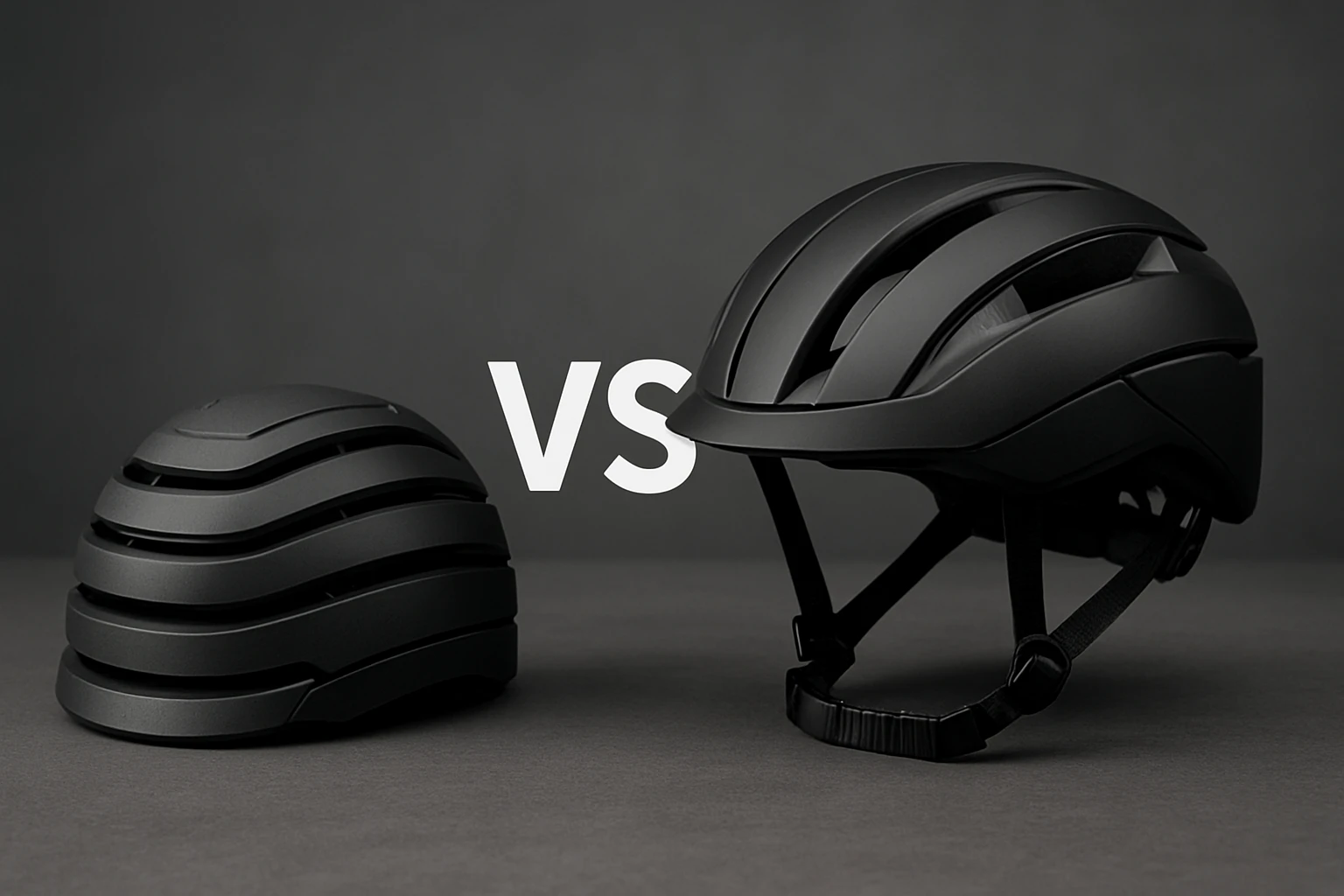
Folding Helmet Weight vs. Protection Explained: How to Choose a Lightweight Helmet Without Sacrificing Safety
Introduction
In recent years, folding helmets have become a popular solution for commuters, cyclists, and construction workers who require both portability and protection. This guide explains the relationship between helmet weight and safety performance, and it equips readers with the knowledge needed to select a lightweight helmet that does not compromise on protection. Readers will learn about the materials, standards, and design strategies that influence weight, as well as how to evaluate real‑world products. By the end of the article, the audience will be prepared to make an informed purchasing decision.
Background and Context
Helmet safety is governed by standards such as ANSI/ISEA Z89.1 for industrial hard hats and CPSC/EN1078 for bicycle helmets. These standards define impact attenuation, penetration resistance, and retention system performance. At the same time, manufacturers strive to reduce mass to improve comfort, especially for users who wear helmets for extended periods. Understanding how weight, material choice, and ventilation interact is essential for assessing whether a lightweight helmet meets the required safety thresholds.
Two primary categories dominate the market: rigid hard hats for construction and folding helmets for cycling or multi‑modal travel. Rigid hard hats, such as the Safebuilder Adjustable Ventilated Hard Hat, rely on high‑strength ABS shells and suspension systems to absorb impact. Folding helmets, exemplified by the FEND One Foldable Bike Helmet, use engineered hinges and collapsible cores to achieve compactness while retaining certified protection.
Both categories share common design goals: reduce head fatigue, maintain stable fit, and provide reliable impact mitigation. The challenge lies in achieving these goals without adding excessive weight, which can cause neck strain and reduce user compliance.
Understanding Helmet Weight vs. Protection
Weight influences three key aspects of helmet performance: comfort, stability, and energy absorption. A heavier helmet may distribute impact forces over a larger surface area, but it also increases the moment arm on the neck, potentially leading to fatigue. Conversely, a lightweight helmet can improve wearer endurance but must incorporate advanced materials to meet impact standards.
Manufacturers address this trade‑off through:
- Material innovation: High‑strength polymers such as ABS, polycarbonate (PC), and expanded polystyrene (EPS) provide a favorable strength‑to‑weight ratio.
- Structural engineering: Zonal impact zones, honeycomb cores, and patented folding mechanisms concentrate protection where it is most needed.
- Ventilation design: Strategically placed vents reduce heat buildup without compromising shell integrity.
When evaluating a helmet, the user should verify that the product meets the relevant certification (e.g., ANSI Z89.1‑2014 for hard hats, CPSC for bike helmets) and that the weight is appropriate for the intended activity duration.
Materials and Construction Techniques
Modern helmets employ a combination of outer shells and inner liners. The outer shell resists penetration, while the inner liner absorbs kinetic energy. Below are common material pairings:
| Component | Typical Material | Weight Impact | Protection Role |
|---|---|---|---|
| Outer Shell | ABS (Acrylonitrile Butadiene Styrene) or PC (Polycarbonate) | Moderate | Resists puncture and distributes impact |
| Inner Liner | EPS (Expanded Polystyrene) or PSE (Poly‑Styrene‑Ethylene) | Low | Absorbs shock energy |
| Folding Mechanism | Patented hinge steel or reinforced polymer | Varies | Maintains structural integrity when folded |
The Safebuilder Adjustable Ventilated Hard Hat utilizes a high‑strength ABS shell, offering reliable protection while keeping the weight within a manageable range for daily construction use. The FEND One Foldable Bike Helmet combines ABS outer layers with an ultralight PC core, achieving a compact form factor without sacrificing certified impact performance.
Ventilation vs. Safety Trade‑offs
Ventilation improves comfort by allowing airflow, but each vent creates a potential weak point. Engineers mitigate this risk by reinforcing vent edges and using internal ribs that channel impact forces around the openings. The Safebuilder Adjustable Ventilated Hard Hat features adjustable vents that can be closed in rainy or dusty environments, preserving protection while offering breathability.
Folding helmets often incorporate multiple vents to offset heat buildup during intense rides. The FEND One Foldable Bike Helmet includes a ventilation system integrated into its patented fold, ensuring airflow even when the helmet is collapsed for storage. Similarly, the Overade Plixi Foldable Bike Helmet provides fourteen vents that balance cooling with structural rigidity.
When selecting a helmet, users should verify that vent closures are present if they anticipate adverse weather, and that the vent design complies with the applicable safety standard.
Choosing the Right Helmet for Your Activity
Different use cases demand distinct performance priorities. The following subsections outline recommendations based on common scenarios.
1. Construction and Industrial Work
For workers who need a hard hat that can be worn for long shifts, the Safebuilder Adjustable Ventilated Hard Hat is an excellent choice. It offers a 6‑point suspension system, a Y‑type chin strap, and an adjustable size range of 53‑63 cm, ensuring a secure fit for a wide range of head sizes. The product holds a 4.6‑star rating from 397 reviews, indicating strong user satisfaction. Its compliance with ANSI Z89.1‑2014 Type 1 Class C and CE EN397‑2012 standards guarantees protection against impact and penetration.
2. Urban Commuting and Bike‑Sharing
Commuters who require a compact, portable solution should consider the FEND One Foldable Bike Helmet. The patented Smart‑Fold technology reduces the helmet’s volume by 50 %, allowing it to fit in a backpack or messenger bag. It is certified to exceed both US CPSC and EU EN1078 standards, providing confidence that the folding mechanism does not compromise safety. The helmet’s Fit Dial system offers precise adjustment, and the product carries a 4.5‑star rating from 321 reviewers.
3. City Riding with Style
The Overade Plixi Foldable Bike Helmet appeals to riders who value aesthetics alongside functionality. Its removable cap adds weather protection, while the 14 vents maintain airflow during hot summer rides. The helmet meets US CPSC standards, and its French‑designed, award‑winning construction emphasizes both form and function. With a 4.5‑star rating from 293 reviews, it has proven popular among urban cyclists.
4. Mountain Biking and High‑Impact Sports
For off‑road enthusiasts, the Smith Engage MIPS Mountain Bike Helmet delivers advanced impact mitigation through its MIPS (Multi‑directional Impact Protection System) technology and Koroyd cellular core. Although not a folding model, its lightweight construction (approximately 320 g) and 20 fixed vents make it suitable for long descents where ventilation and weight are critical. The helmet holds a 4.8‑star rating from 822 reviews, reflecting its high performance and comfort.
When choosing a helmet, the user should assess the following criteria:
- Certification compliance (ANSI, CPSC, EN1078, etc.)
- Weight relative to expected wear time
- Ventilation needs based on climate
- Fit adjustment mechanisms (dial, suspension, chin strap)
- Additional features such as removable caps, accessory mounts, or MIPS technology
Comparison and Selection Guide
The table below summarizes the key specifications of the four featured helmets, allowing readers to compare weight, protection level, and unique features at a glance.
| Helmet | Weight (approx.) | Certification | Key Protective Feature | Notable Convenience |
|---|---|---|---|---|
| Safebuilder Adjustable Ventilated Hard Hat | ~900 g | ANSI Z89.1‑2014 Type 1 Class C, CE EN397‑2012 | High‑strength ABS shell, 6‑point suspension | Adjustable vents, chin strap, accessory mounts |
| FEND One Foldable Bike Helmet | ~420 g | CPSC, EN1078 (exceeds) | Smart‑Fold patented hinge, EPS core | 50 % volume reduction, Fit Dial system |
| Overade Plixi Foldable Bike Helmet | ~430 g | CPSC | ABS outer shell, PSE inner shell | Removable cap, 14 vents, 3‑fold reduction |
| Smith Engage MIPS Mountain Bike Helmet | ~320 g | CPSC, EN1078, AS/NZS 2063 | MIPS technology, Koroyd cellular core | 20 vents, adjustable visor, lightweight |
Readers should match the helmet’s weight and features to the duration of wear and the intensity of the activity. For example, a commuter who rides 30 minutes each day may prioritize ultra‑light weight and folding capability, making the FEND One Foldable Bike Helmet an optimal selection.
Best Practices & Tips
- Perform a fit test: Ensure the helmet sits level on the head, with the front edge approximately one inch above the eyebrows.
- Check retention system integrity: The chin strap should be snug but not uncomfortable; replace worn straps promptly.
- Maintain ventilation: Clean vents regularly to prevent debris buildup that could reduce airflow.
- Store folded helmets properly: Keep the folding mechanism in a dry environment to avoid corrosion of hinge components.
- Replace after impact: Even if no visible damage is present, replace the helmet after a significant collision to guarantee continued protection.
- Consider accessories: Ear‑muff mounts, visor attachments, and carrying bags enhance functionality without adding significant weight.
Frequently Asked Questions
- Does a lighter helmet mean less protection? Not necessarily. Modern materials and engineering allow lightweight helmets to meet or exceed safety standards. Certification is the definitive indicator of protection level.
- Can I use a folding bike helmet for construction work? Folding helmets are designed for cycling standards and may not satisfy ANSI Z89.1 requirements for industrial head protection. For construction, a certified hard hat such as the Safebuilder Adjustable Ventilated Hard Hat is recommended.
- How often should I replace my helmet? Most manufacturers advise replacement every five years, or immediately after a serious impact, regardless of visible damage.
- Are MIPS helmets heavier than non‑MIPS models? MIPS adds a thin low‑friction layer, typically increasing weight by less than 30 g, which is negligible compared to the safety benefit.
- What is the advantage of a removable cap on a folding helmet? A removable cap provides sun and rain protection while preserving the helmet’s compactness when folded, as seen on the Overade Plixi Foldable Bike Helmet.
- Do ventilation vents affect compliance with safety standards? Standards account for vented designs; manufacturers must test helmets with vents open to ensure compliance.
- Is the price difference justified by safety features? Higher‑priced helmets often include advanced technologies such as MIPS, Koroyd cores, or patented folding mechanisms. Buyers should weigh these features against their specific needs.
Conclusion
Balancing weight and protection requires a clear understanding of materials, certification standards, and design features. By evaluating the specific demands of one’s activity—whether it is daily construction work, urban commuting, or mountain biking—readers can select a helmet that offers optimal safety without unnecessary bulk. The products highlighted in this guide illustrate how modern engineering delivers lightweight solutions while adhering to rigorous safety criteria. Ultimately, the best helmet is the one that fits well, meets the required standards, and encourages consistent use.
Products Featured in This Guide
Safebuilder Adjustable Ventilated Hard Hat
Price: $28.49 | Rating: 4.6/5 (397 reviews)
Featured for its high‑strength ABS construction, adjustable ventilation, and compliance with ANSI Z89.1‑2014, making it ideal for industrial environments.
FEND One Foldable Bike Helmet
Price: $119.00 | Rating: 4.5/5 (321 reviews)
Featured for its patented Smart‑Fold technology, 50 % volume reduction, and certification that exceeds CPSC and EN1078 standards.
Overade Plixi Foldable Bike Helmet
Price: $129.00 | Rating: 4.5/5 (293 reviews)
Featured for its 14‑vent design, removable weather‑proof cap, and compliance with US CPSC standards, providing a stylish yet safe urban solution.
Smith Engage MIPS Mountain Bike Helmet
Price: $160.00 | Rating: 4.8/5 (822 reviews)
Featured for its MIPS technology, Koroyd cellular core, and lightweight construction, delivering premium protection for high‑impact mountain biking.
Frequently Asked Questions
What standards determine the safety of folding helmets?
Folding helmets must meet standards like ANSI/ISEA Z89.1 for industrial hard hats and CPSC/EN1078 for bicycle helmets, which test impact, penetration, and retention.
How does helmet weight affect comfort and protection?
Lighter helmets improve comfort for long wear, but weight alone doesn’t dictate safety; proper materials and design ensure protection.
Which materials allow a helmet to be lightweight yet safe?
Advanced foams, carbon fiber, and high‑strength polycarbonate shells provide low weight while maintaining impact attenuation.
What design features help reduce weight without compromising safety?
Optimized shell geometry, strategic ventilation channels, and integrated retention systems distribute forces efficiently while trimming mass.
How can I evaluate if a lightweight folding helmet meets safety standards?
Check for certification labels, review test results, and verify that the helmet’s impact rating matches the relevant standard for its intended use.