Introduction
In this guide the reader will learn a systematic method to clean a foldable helmet, eliminate persistent odor, remove sweat residue, and preserve the integrity of the hinge mechanism. A clean helmet not only extends its service life but also maintains optimal safety performance, because debris can compromise the shell and the locking system. By following each step the user will achieve a fresh‑smelling, hygienic helmet that feels as comfortable as the day it was purchased. The procedures described are suitable for all common foldable designs, from commuter models to mountain‑bike variants.
What You'll Need
- Soft microfiber cloths – to wipe away surface grime without scratching.
- Gentle brush with soft bristles – for reaching vent openings.
- Warm water mixed with a mild detergent.
- Motorex Helmet Care Spray – a foam cleaner that deodorizes, protects surfaces, and works on both shell and interior padding.
- Motorex Helmet Care – a 200 ml aerosol for deeper cleaning of removable liners and hinges.
- Compressed air canister – to dry hard‑to‑reach areas.
- Optional: Zacro Adult Bike Helmet – used as a reference for proper fit after cleaning.
Step 1 – Inspect the Helmet
Before any cleaning begins, examine the helmet for cracks, loose screws, or worn padding. Verify that the hinge mechanism moves smoothly and that the locking latch engages securely. If damage is detected, repair or replace the affected component before proceeding, because cleaning a compromised helmet does not restore safety. Document any issues with photographs; this habit helps when consulting a professional repair service.
Step 2 – Remove Removable Pads and Liner
Most foldable helmets feature detachable interior pads for comfort and hygiene. Gently unclip or unsnap the pads according to the manufacturer's instructions. Place the pads in a bowl of warm, soapy water for five minutes. This soaking loosens sweat, oil, and bacteria that cause odor. While the pads soak, inspect the hinge pins for accumulated grime.
Step 3 – Clean the Outer Shell
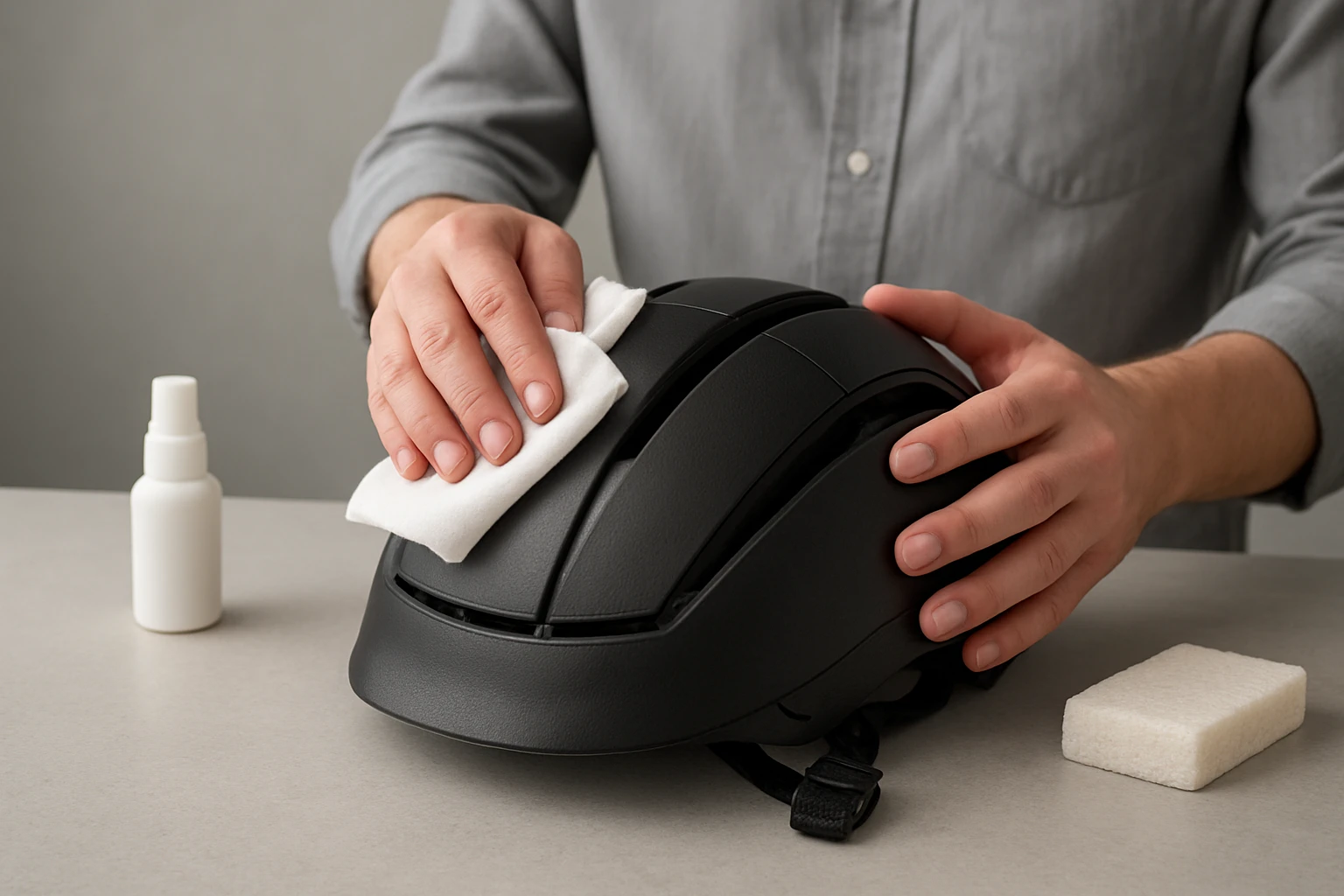
Apply a light mist of Motorex Helmet Care Spray to the outer shell. The foam formulation penetrates polymer pores, lifts dirt, and leaves a protective coating that resists future staining. The product is CE‑marked and has a 4.8‑star rating from twelve verified reviewers, indicating reliable performance. After spraying, use a soft microfiber cloth to wipe the surface in circular motions, paying special attention to vent openings and the visor area if present. For stubborn grime, employ the soft‑bristle brush, but avoid excessive pressure that could scratch the polycarbonate shell.
Step 4 – Deodorize and Clean the Interior
Remove the helmet from the cleaning area and shake out any loose debris. While the interior pads continue to soak, spray the inner lining of the helmet with Motorex Helmet Care Spray. The foam neutralizes odor‑causing bacteria and adds a thin protective layer that repels moisture. Allow the foam to sit for one minute, then use a clean microfiber cloth to blot excess product. For deeper sanitation, especially in helmets with removable foam inserts, spray the 200 ml Motorex Helmet Care aerosol directly onto the foam. The aerosol reaches crevices that a cloth cannot, ensuring thorough deodorization.
Step 5 – Clean the Hinges and Locking Mechanism
The hinge is the most vulnerable part of a foldable helmet because repeated folding can introduce grit that wears metal surfaces. Use a cotton swab lightly dampened with Motorex Helmet Care Spray to scrub the pivot points, then wipe with a dry cloth. For metal pins, the spray’s protective additives reduce corrosion risk, extending hinge lifespan. After cleaning, apply a drop of silicone‑based lubricant if the manufacturer recommends it, but avoid over‑lubricating, which can attract dust.
Step 6 – Dry the Helmet Completely
Drying is critical because residual moisture can promote mold growth inside the padding. Remove the helmet from the work surface and place it in a well‑ventilated area away from direct sunlight, which could warp the shell. Use a compressed air canister to blow dry air through vents and hinge gaps, ensuring that no water remains trapped. Allow at least thirty minutes of air‑dry time before reassembly. If time permits, leave the helmet upright on a towel overnight for additional drying.
Step 7 – Reassemble and Test Fit
Once all components are dry, reinstall the interior pads and secure any straps. Adjust the dial or strap system to achieve a snug yet comfortable fit. To verify that the hinge operates smoothly, fold and unfold the helmet several times, listening for any grinding noises. Finally, place the helmet on your head or on a mannequin and compare the fit to a reference model such as the Zacro Adult Bike Helmet, which is praised for its adjustable fit and lightweight design. A proper fit ensures that the protective shell will function as intended in the event of impact.
Tips & Pro Tips
- Perform a quick cleaning after each ride to prevent sweat buildup; this reduces the frequency of deep cleaning.
- Store the helmet in a breathable bag rather than a sealed plastic container; airflow prevents mildew.
- If the helmet has a removable visor, clean it separately with the same spray to avoid streaks.
- For helmets used in rainy climates, consider applying a water‑repellent spray after cleaning to maintain the shell’s hydrophobic properties.
Troubleshooting
Persistent Odor After Cleaning
If an unpleasant smell remains, repeat the interior spray step using the 200 ml aerosol, allowing the foam to sit for three minutes before wiping. In extreme cases, replace the removable padding, as the foam can become saturated over time.
Hinge Stiffness
Should the hinge feel gritty after cleaning, gently sand the pivot points with ultra‑fine sandpaper (400‑grit) to remove micro‑abrasions, then reapply the spray and a thin layer of lubricant.
Conclusion
By following the seven detailed steps, the reader can confidently clean a foldable helmet, eradicate odor, remove sweat residue, and protect the hinge mechanism for many more rides. Regular maintenance not only preserves aesthetic appeal but also sustains the helmet’s safety certifications, ensuring that the protective equipment performs reliably when needed. The recommended products – Motorex Helmet Care Spray, Motorex Helmet Care, and the Zacro Adult Bike Helmet as a fit reference, provide affordable, highly rated solutions that simplify each stage of the process. Consistent care will keep the helmet lightweight, breathable, and ready for the next adventure.
Products Mentioned in This Guide
Frequently Asked Questions
How often should I clean a foldable helmet to prevent odor and wear?
Clean the helmet after every 10‑15 rides or whenever it feels sweaty, and deep‑clean it at least once a month.
Can I use regular shampoo or harsh chemicals on a foldable helmet?
No; use warm water with mild detergent or a dedicated helmet care spray to avoid damaging the shell and hinge.
What is the safest way to clean the hinge mechanism of a foldable helmet?
Wipe the hinge with a soft, damp microfiber cloth and avoid submerging it in water; lubricate lightly with a helmet‑approved spray if needed.
Will a microfiber cloth scratch the helmet’s interior padding?
No; microfiber is gentle enough for both the shell and padding when used without excessive pressure.
Is it necessary to dry the helmet completely before storing it?
Yes; air‑dry the helmet in a well‑ventilated area to prevent moisture buildup and mold growth.