Introduction
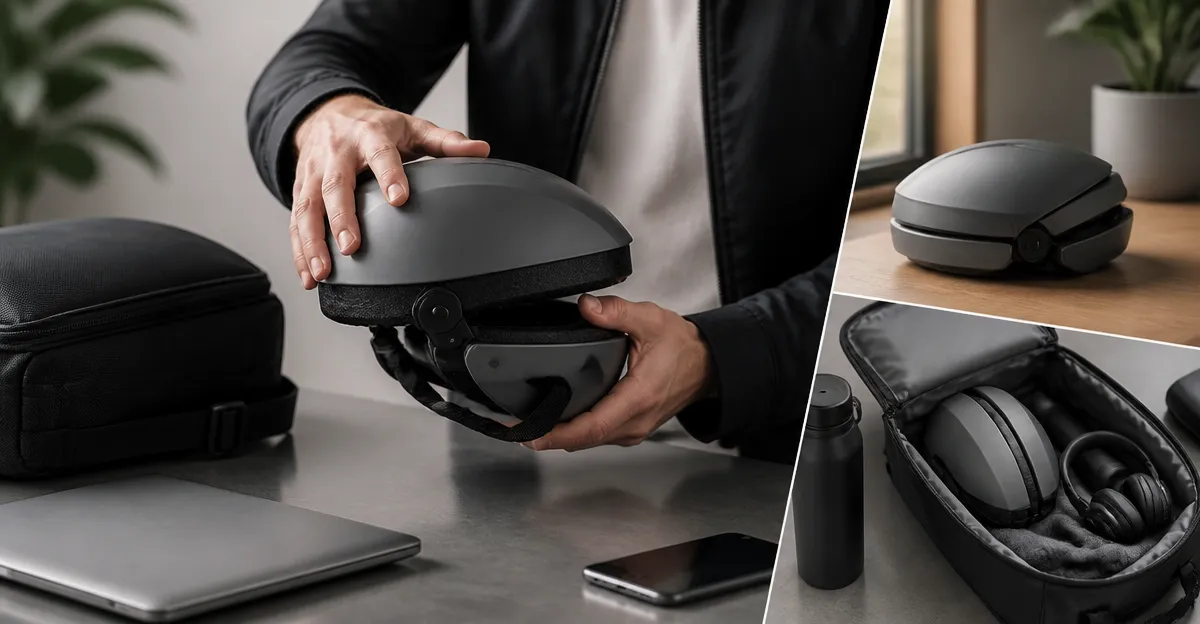
This guide explains how to choose, operate, and maintain a one‑handed foldable helmet. Readers will understand the safety principles behind compact helmets, learn which models excel in portability and protection, and receive actionable maintenance advice. The article balances technical detail with practical recommendations, ensuring that even riders new to foldable helmets can make informed decisions. By the end of the guide, one will be equipped to select a helmet that matches personal riding habits, budget, and style.
Background and Context
Urban mobility has expanded beyond traditional bicycles to include e‑bikes, scooters, skateboards, and even inline skates. Each mode presents a unique risk profile, yet all share a common safety requirement: head protection that does not impede daily convenience. Foldable helmets address this need by collapsing to a fraction of their original volume, allowing riders to store them in backpacks, briefcases, or luggage.
The term “one‑handed” refers to helmets that can be unfolded and secured using a single hand, a feature especially valuable for commuters who must juggle bags, coffee, or public‑transport tickets. Modern designs incorporate patented folding mechanisms, adjustable fit systems, and integrated lighting to meet both regulatory standards and real‑world convenience.
Regulatory compliance remains essential. In the United States, the Consumer Product Safety Commission (CPSC) sets impact‑absorption standards, while Europe relies on EN1078. Helmets that meet these criteria undergo rigorous testing for shock attenuation, retention‑system strength, and field‑of‑view clearance. Selecting a certified product ensures that portability does not compromise protection.
Key Concepts for One‑Handed Foldable Helmets
Understanding the mechanical and ergonomic principles behind foldable helmets helps riders evaluate claims made by manufacturers. The primary concepts include folding mechanism reliability, impact‑absorption materials, fit adjustment range, and ancillary features such as lighting or reflective elements.
First, the folding mechanism must lock securely in the expanded position. A common failure mode is accidental collapse during impact, which can reduce protection. Premium helmets employ a “smart‑fold” or “patented lock‑click” system that only releases when the user applies intentional pressure.
Second, the shell material—typically polycarbonate or ABS—provides rigidity, while the inner Expanded Polystyrene (EPS) foam absorbs kinetic energy. The thickness and density of the EPS core directly influence the helmet’s ability to reduce concussion risk.
Third, fit adjustment is achieved through rear elastic bands, dial‑systems, or removable padding. A proper fit eliminates pressure points and ensures the helmet remains in place during sudden deceleration. Finally, visibility enhancements such as reflective bands or integrated LED lights increase safety in low‑light conditions, a frequent scenario for city commuters.
Product Recommendations
The following products exemplify the concepts described above. Each model has been selected for its blend of safety, portability, and user‑friendly operation. The first mention of each product includes a direct affiliate link.
Closca Foldable Helmet (Model A)
Closca Store offers a helmet that folds in less than one second, reducing its volume by 45 %. The polycarbonate shell and EPS foam meet all bicycle and scooter safety standards, while a rear reflective micro‑prism band improves night‑time visibility. Weights range from 250 g to 280 g, making it lightweight for extended wear. The rear adjustment system uses elastic bands for a one‑time fit, available in sizes M (56–59 cm) and L (59.5–63 cm). Priced at $89.90 with a 4.4‑star rating from 461 reviews, it provides a cost‑effective entry point for commuters.
Closca Foldable Helmet (Model B)
Model B shares the same safety credentials as Model A but emphasizes a slimmer folded height of 6.5 cm. This ultra‑compact profile is ideal for riders who travel with a suitcase or need to stow the helmet in a tight backpack compartment. Like its counterpart, it includes a 3‑year manufacturer warranty and the same adjustable rear elastic system. At $89.90 and a 4.4‑star rating, it offers identical protection with a slightly different form factor.
Overade Plixi Foldable Helmet
Overade Store’s Plixi model distinguishes itself by dividing its volume by three when folded, the most compact ratio on the market. The ABS outer shell and US CPSC‑certified EPS core deliver robust impact protection. Adjustable fit is achieved through lockable dividers and extra padding, accommodating head sizes from 54 cm to 62 cm. Priced at $129.00 with a 4.5‑star rating from 309 reviews, it includes customizable accessories such as a visor and weather cover. The helmet’s urban‑mobility focus makes it suitable for e‑bikes, scooters, and even rollerblades.
FEND Super Plus Folding Helmet
FEND Super Plus integrates removable USB‑C rechargeable LED lights (30 lumens each) that provide 360° visibility up to 800 meters. The patented Smart‑Fold technology reduces the helmet’s size by 50 % and the Fit Dial System offers precise adjustment across three sizes. Certified to exceed both US CPSC and EU EN1078 standards, it weighs approximately 280 g. At $139.00 with a 4.5‑star rating from 85 reviews, it adds high‑visibility lighting to the foldable‑helmet equation, appealing to night‑time commuters.
FEND One Foldable Helmet
The original award‑winning model from FEND, the One, folds by 50 % and carries the Red Dot and Edison design awards. Its ABS shell, ultralight polycarbonate, and high‑impact EPS core meet stringent safety standards. The Fit Dial System provides a personalized fit in two size ranges, and the helmet is backed by a 30‑day money‑back guarantee plus an Accident Replacement Program. Priced at $119.00 with a 4.5‑star rating from 327 reviews, it balances design accolades with everyday practicality.
Comparison and Selection Guide
| Feature | Closca (A) | Closca (B) | Overade Plixi | FEND Super Plus | FEND One |
|---|---|---|---|---|---|
| Folded Height | ~45 % reduction | 6.5 cm | Divided by 3 | 50 % reduction | 50 % reduction |
| Weight | 250‑280 g | 250‑280 g | ≈300 g | ≈280 g | ≈280 g |
| Safety Standard | CPSC/EN1078 | CPSC/EN1078 | CPSC | CPSC/EN1078 | CPSC/EN1078 |
| Integrated Lighting | No | No | No (accessories optional) | USB‑C rechargeable LEDs | No |
| Reflective Elements | Rear micro‑prism band | None specified | None | LEDs provide visibility | None |
| Price (USD) | 89.90 | 89.90 | 129.00 | 139.00 | 119.00 |
| Average Rating | 4.4/5 (461) | 4.4/5 (461) | 4.5/5 (309) | 4.5/5 (85) | 4.5/5 (327) |
When selecting a helmet, prioritize the factors that align with personal riding patterns. If ultra‑compact storage is paramount, the Overade Plixi offers the smallest folded profile. Riders who need built‑in illumination should consider the FEND Super Plus. For budget‑conscious commuters who still desire a reputable safety record, either Closca model delivers solid protection at under $90.
Best Practices & Tips
- Always inspect the folding lock before each ride; ensure the click sound is audible and the helmet does not wobble.
- Adjust the rear elastic bands or Fit Dial System while the helmet is on a level surface; a snug fit should allow only a fingertip of movement at the front.
- Clean the interior padding with a mild soap solution and let it air‑dry; avoid submerging the EPS core in water.
- Replace the helmet after any significant impact, even if visual damage is minimal; the EPS foam can compress permanently.
- For models with integrated LEDs, charge the battery nightly using the supplied USB‑C cable to guarantee full brightness during evening commutes.
- Store the folded helmet in a protective sleeve to prevent scratches on the shell and to maintain the integrity of the folding hinges.
Frequently Asked Questions
- Can a foldable helmet be as safe as a traditional rigid helmet?
- Yes, provided the helmet meets CPSC or EN1078 certification and the folding mechanism locks securely. All products featured have passed these standards.
- How often should I replace the EPS foam?
- The EPS core should be replaced after any crash that generates a noticeable impact, typically within 3‑5 years of regular use even without accidents.
- Is one‑handed operation realistic for all users?
- Most modern foldable helmets are designed for single‑hand deployment. Users with limited hand strength should practice the unfolding motion while stationary to build confidence.
- Do the integrated lights on the FEND Super Plus affect the helmet’s weight?
- The LED modules add roughly 30 g, which is negligible compared to the overall helmet weight of about 280 g.
- Are the reflective bands effective in daylight?
- Reflective micro‑prisms enhance visibility when illuminated by vehicle headlights or streetlights; they do not function as high‑visibility colors in bright sunlight.
- Can I use a helmet designed for bicycles on an e‑scooter?
- All helmets listed are certified for bicycles, e‑bikes, and e‑scooters, so cross‑usage is permitted under the safety standards.
Conclusion
One‑handed foldable helmets reconcile the need for rigorous head protection with the convenience demanded by modern urban mobility. By understanding folding mechanisms, safety certifications, and fit systems, riders can select a model that aligns with their budget and lifestyle. The products highlighted—Closca, Overade, and FEND—represent the current market’s best blend of portability, durability, and innovative features. Maintaining the helmet through regular inspections, proper cleaning, and timely battery charging (where applicable) ensures long‑term performance. Ultimately, the right foldable helmet encourages consistent helmet use, thereby reducing head‑injury risk for city commuters worldwide.
Products Featured in This Guide
Closca Foldable Helmet (Model A)
Price: $89.90 | Rating: 4.4/5 (461 reviews)
Featured for its rapid 45 % volume reduction, lightweight polycarbonate shell, and rear reflective micro‑prism band that enhances night‑time visibility.
Closca Foldable Helmet (Model B)
Price: $89.90 | Rating: 4.4/5 (461 reviews)
Featured for its ultra‑thin 6.5 cm folded height, making it ideal for travelers who need the smallest possible storage footprint.
Overade Plixi Foldable Helmet
Price: $129.00 | Rating: 4.5/5 (309 reviews)
Featured for its patented folding system that reduces volume by a factor of three, ABS outer shell, and customizable accessories such as a visor and weather cover.
FEND Super Plus Folding Helmet
Price: $139.00 | Rating: 4.5/5 (85 reviews)
Featured for its integrated USB‑C rechargeable LED lights, 30‑lumen output, and Smart‑Fold design that reduces size by 50 % while exceeding both US and EU safety standards.
FEND One Foldable Helmet
Price: $119.00 | Rating: 4.5/5 (327 reviews)
Featured for its award‑winning Red Dot and Edison design accolades, 50 % fold reduction, and the FEND Fit Dial System that offers precise, personalized fitting.